.png?width=765&height=430&name=130%20(1).png)
.png?width=500&height=500&name=126%20(1).png)
AI search engine optimization: the 2026 playbook
The monitoring piece is the heart of it. The tool runs a set of prompts through the major AI engines on a schedule, records the answers, and notes whether your brand showed up, in what context, and alongside which competitors. That gives you something you can't easily eyeball on your own, because you get a repeatable read on your AI visibility over time instead of a one-off check that goes stale by next week.
The analysis layer turns those raw answers into patterns. It might tell you that Perplexity cites you for pricing questions but never for process questions, or that a competitor owns the answers for a topic you thought you led. From there, the recommendation layer suggests fixes, usually around content structure, schema markup, and which questions you should be answering that you currently aren't.
There's a real limit worth naming. These tools measure your visibility and guide your next move, but the authoritative, experience-backed content that earns a citation still has to come from you. They tell you where you stand and where the gaps are, and closing those gaps comes down to publishing genuinely useful answers that an AI wants to quote.
VIDEO TRAINING
Get the Growth Playbook.
Learn to plan, budget, and accelerate growth with our exclusive video series. You’ll discover:
 The 5 phases of profitable growth
- 12 core assets all high-growth companies have
- Difference between mediocre marketing and meteoric campaigns
.png?width=798&height=842&name=Playbook%20(1).png)
Thanks for submitting the form!
What can you do manually before buying a tool?
You can cover most of the essentials by hand, especially when you're just getting started. The two free things worth doing first are spot-checking your AI visibility directly and tightening the content and schema on the pages that matter.
Spot-checking is exactly what it sounds like. Open ChatGPT, Gemini, Perplexity, and Claude, then ask the questions your buyers actually ask, the ones where you'd want to show up. Note whether you appear, who appears instead, and how each engine frames the answer. Run the same prompts every month and keep the results in a simple spreadsheet, and you've built a manual version of what the monitoring tools automate. The approach gets tedious once you're tracking a lot of prompts, but it's accurate and free, which is hard to argue with when you're starting out.
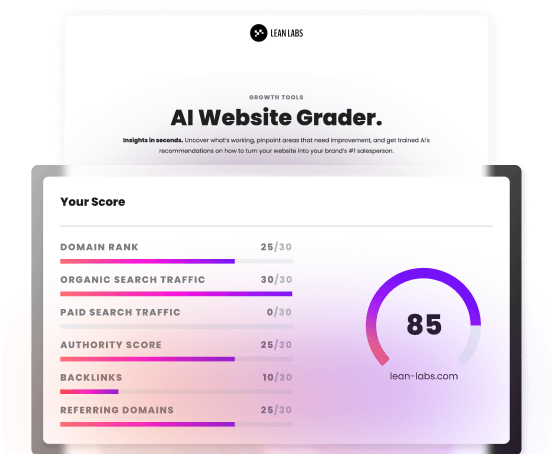
HubSpot also offers a free AI Search Grader that checks how your brand shows up in AI search and gives you a starting read on your visibility, which is a reasonable first measurement before you commit budget to a paid platform.
On the content side, the manual work is the work that actually moves the needle. Answer real questions in the first sentence of each section, write standalone paragraphs that make sense when an AI lifts them out of context, use question-based headings, and add clean schema markup so machines can read what each block of content means. None of that requires software, since it really comes down to knowing what AI systems reward and then doing it on the pages that matter. That is why a clear approach to AEO tends to do more for your citations than any dashboard, since a dashboard only reports the gap and the strategy behind it is what closes the gap with new content.
Capability comparison: what each feature does and whether you need it yet
The table below breaks down the common capabilities you'll find across AI search optimization tools, what each one does, and an honest read on whether it's worth paying for at your current stage.
|
Capability |
What it does |
Do you need it yet? |
|
AI visibility monitoring |
Runs your priority prompts through ChatGPT, Gemini, Perplexity, and Claude on a schedule and logs whether you're cited |
Useful once you have real content live and want to track trends. Before that, manual spot-checks cover you fine. |
|
Competitive citation tracking |
Shows which competitors AI mentions for your key questions and how often |
Valuable in a crowded category where you're fighting for the same answers. Less urgent if you're early or in a niche space. |
|
Content gap analysis |
Flags questions buyers ask that you don't currently answer well |
Helpful once you're publishing regularly and want to prioritize what to write next. Easy to do by hand at low volume. |
|
Schema and structure recommendations |
Audits your markup and suggests improvements for machine readability |
Handy as a checklist, though a good developer or AEO process already covers the fundamentals. |
|
Prompt and answer history |
Stores how AI answers changed over time so you can see what's improving |
Worth it when you're actively investing in AEO and need to prove the work is paying off. |
|
Sentiment and context tracking |
Notes not just whether you're mentioned but how favorably and in what framing |
A more advanced need, most relevant for established brands managing reputation across AI answers. |
The honest pattern across that table: nearly every capability has a manual equivalent that works fine at low volume. The tools earn their keep when the volume gets high enough that doing it by hand stops being realistic.
When does paying for an AI search optimization tool make sense?
Paying for a tool makes sense once the manual version becomes a real time drain or once AI search is a meaningful enough channel that you need to prove and improve it systematically. For most teams, that tipping point arrives when you're publishing content regularly, tracking more than a handful of priority prompts, and competing against rivals who are clearly optimizing for AI answers too.
A few specific situations push you toward a paid platform. If you're managing AEO across a large site with hundreds of pages, manual tracking simply can't keep up with how often AI answers shift, which is also the point where scaling AEO content with AI agents starts to earn its place alongside the monitoring. If you need to report AI visibility to leadership or a client, automated monitoring gives you the trend data and screenshots that a spreadsheet of one-off checks won't. And if your category is competitive enough that small movements in citation share matter to revenue, the speed of an automated tool starts to pay for itself.
Earlier-stage teams are usually better served by putting that budget into the content itself. A tool can confirm that AI isn't citing you, which is information you can often get for free, whereas the work that actually changes the answer is building a body of genuinely useful, well-structured content that AI wants to quote. When you're still building that foundation, getting the content and schema right tends to pay off more than measuring it does, so we typically suggest sorting those out first and layering on a tool once you have enough live material for the monitoring to be meaningful.
What should you look for in an AI search optimization tool?
Look for accurate multi-engine coverage, transparency about how the tool gathers its data, and recommendations specific enough to act on. The category is young and crowded, so feature lists vary widely and change often, which means you should verify current capabilities and pricing directly with each vendor before you commit.
Coverage is the first filter. AI answers differ across ChatGPT, Gemini, Perplexity, and Claude, so a tool that only checks one engine gives you a partial picture. Confirm which engines a platform actually queries and how frequently it refreshes, because a tool that checks monthly tells you far less than one that checks often enough to catch the shifts that matter.
Then look at how the tool gets its answers and whether you trust the method, since AI outputs vary by phrasing, region, and personalization, and a tool's results are only as good as the prompts and conditions behind them. The most useful platforms are transparent about exactly what they're asking and how, so you can judge whether their read reflects what your actual buyers see. Finally, weigh the recommendations. Generic advice you already know does little for you, so the platforms worth paying for tie their guidance to your specific gaps, like the questions you're missing and the pages that need better structure, which is what turns monitoring into something you can actually act on.
.png?width=2146&height=1250&name=july-16-cta%20(1).png)
Schema markup recommendations
For a buying-decision page like this one, structured data helps AI systems read your content cleanly and quote it accurately:
- FAQPage schema around the question-based H2 sections, with each heading as a Question and its opening answer as the acceptedAnswer, keeping the schema text matched to what's visible on the page
- Article schema with author, datePublished, and dateModified, so the content carries clear authorship and recency signals, which matter most for a fast-moving topic like AI search tooling
- Organization schema on your canonical brand page, defining the entity once with logo, sameAs social profiles, and contact details so AI can tie every brand mention back to a verified source
If you're implementing structured data at scale, our AEO schema setup keeps the markup maintainable across templates rather than hand-coded page by page. Validate every type in Google's Rich Results Test before publishing, and re-check after any template change so empty fields don't quietly cost you citations.
.png?width=1391&height=668&name=Growth%20Mapping%20Session%20(1).png)
.png?width=500&height=500&name=120%20(1).png)