.png?width=765&height=430&name=80%20(1).png)
.png?width=500&height=500&name=126%20(1).png)
AI search engine optimization: the 2026 playbook
Most tools in this space watch a handful of common signals. The first is mention frequency, which is the percentage of monitored prompts where your brand surfaces at all, and alongside it most tools read sentiment and framing so you know whether the model describes you accurately and favorably or repeats something stale. They also record citations, capturing which URLs the assistant linked or leaned on to build its answer, since that tells you what content the model trusts on a topic, and they log competitor presence so you can see who is winning the prompts you want to own. The real value sits in the trend rather than any single reading, because one query on one day tells you very little while the same query tracked weekly starts to show real movement.
VIDEO TRAINING
Get the Growth Playbook.
Learn to plan, budget, and accelerate growth with our exclusive video series. You’ll discover:
 The 5 phases of profitable growth
- 12 core assets all high-growth companies have
- Difference between mediocre marketing and meteoric campaigns
.png?width=798&height=842&name=Playbook%20(1).png)
Thanks for submitting the form!
Which AI visibility optimization tools track brand mentions across LLMs?
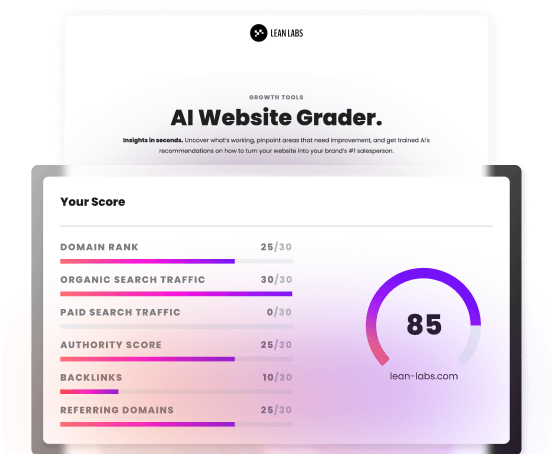
Several dedicated platforms now track brand mentions across multiple LLMs, with Profound, Peec AI, Otterly.AI, and Scrunch AI among the more established options, alongside HubSpot's free AI Search Grader for teams that want a no-cost starting point. Each leans slightly differently, so the right pick depends on how deep you need to go and what you're willing to spend.
Profound is built for larger teams that want comprehensive monitoring across many prompts and engines, with analytics on how and why you appear in answers. Peec AI focuses on share-of-voice tracking against named competitors, which is useful when your main question is "are we beating the other three vendors in our category inside ChatGPT." Otterly.AI tends to suit smaller teams and agencies that want straightforward prompt tracking and citation monitoring without a heavy setup. Scrunch AI leans toward enterprise brand monitoring with an emphasis on how you're represented across assistants. HubSpot's AI Search Grader sits apart from these because it's free and gives you a quick read on your brand's AI visibility and sentiment, which makes it a sensible first stop before you commit budget to a paid platform.
We'd point you to the vendor sites for current capabilities rather than trusting a snapshot, because every one of these tools has shipped meaningful changes in the time we've been using them. The category is competitive enough that feature gaps close quickly, so the differences you read about today may not hold next quarter.
How do these tools differ from content and schema optimization tools?
AI visibility tracking tools measure the output of your work, while content and schema optimization tools shape the input. A tracking tool tells you that your page on HubSpot pricing got cited in Perplexity but ignored in Gemini, whereas a content optimization tool helps you write and structure that page so it's more likely to get picked up in the first place. You need both eventually, though they answer separate questions and tend to live in separate parts of a workflow.
The reason the distinction matters is sequencing. If you optimize content but never track it, you're left guessing whether any of the work actually landed in the answers, and a tracking tool on its own will simply give you a clear view of how absent you are until the content improves. In practice we build the citable content first, often scaling that content with AI agents, then bring in a tracking tool to confirm whether models are quoting it and to find the prompts where we're still getting skipped. The tracker becomes the feedback loop that tells you which pages to improve next, which is why it earns its place even though the content is what earns the citation.
What can you track manually before paying for a tool?
You can reproduce a meaningful slice of paid tracking by hand, which is worth doing before you commit to software so you know what you're buying. Manual checking won't scale past a few prompts, but it tells you whether you have a visibility problem worth paying to solve.
The table below maps what these tools track to how the software helps and how you'd approximate it manually.
|
What to track |
How a tool helps |
Manual alternative |
|
Whether your brand gets mentioned |
Runs your prompts across multiple assistants on a schedule and logs every mention automatically |
Ask your target question in ChatGPT, Gemini, Perplexity, and Claude yourself and note whether you appear |
|
How you're described |
Flags sentiment and accuracy, and alerts you when your framing is stale or wrong |
Read the answer and judge whether the description is current and fair |
|
Which sources get cited |
Captures the cited URLs across engines so you can see what content models trust |
Expand the citations in the answer and record which domains the model linked |
|
Competitor share-of-voice |
Scores you against named competitors across a prompt set over time |
Run the same prompts and tally how often each competitor appears versus you |
|
Change over time |
Tracks trends automatically with dashboards and historical data |
Keep a simple spreadsheet, rerun your prompts every couple of weeks, and log the results |
The honest limit of the manual approach is consistency. AI answers vary between runs and engines update on their own schedule, so a human checking once a month will miss movement that a tool catches by sampling continuously. The manual method is enough to confirm whether you're invisible on the prompts that matter, and that alone usually tells you whether the paid version is worth it.
How should you choose an AI visibility tracking tool?
Choose based on the number of prompts you need to monitor, the engines you care about, and whether competitor benchmarking matters to your goals. A small team watching ten core questions across two assistants has very different needs from an enterprise tracking hundreds of prompts across every major model, and paying for the second when you need the first just adds overhead you won't use.
Start by writing down the actual questions you want to win, since the prompt set is what every tool is really measuring against. Then check which assistants each tool covers, because coverage of Gemini, ChatGPT, Perplexity, and Claude varies and you want the engines your buyers actually use. Run HubSpot's free AI Search Grader first to get a baseline read at no cost, and only move to a paid platform once you know you have enough volume and enough of a gap to justify it. Confirm current pricing and feature details directly with each vendor when you're ready to decide, because this category changes too fast for any third-party summary to stay accurate for long.
.png?width=2146&height=1250&name=july-16-cta%20(1).png)
Schema markup recommendations
Adding structured data helps AI engines understand your content clearly, which makes a clean mention or citation more likely and gives your tracking tool something better to measure. For brand-tracking content like this, we recommend a few schema types that map directly to how models read a page:
- Article schema with author, datePublished, and dateModified, so a model can see who wrote the page and how current it is, which matters because tracking tools surface stale framing fast
- FAQPage schema covering the questions in your headings, since question-based markup helps engines match your page to the conversational prompts these tools monitor
- Organization schema linking the page to your brand entity, which helps an assistant connect a mention back to a recognized source rather than treating you as an unnamed reference
- Product or SoftwareApplication schema if you publish your own comparison of tools, so models can parse the named entities you're describing and attribute them correctly
.png?width=1391&height=668&name=Growth%20Mapping%20Session%20(1).png)
.png?width=500&height=500&name=120%20(1).png)
.png?width=500&height=500&name=122%20(1).png)