.png?width=765&height=430&name=90%20(1).png)
.png?width=500&height=500&name=126%20(1).png)
AI search engine optimization: the 2026 playbook
The three capabilities map onto the three questions every AEO program has to answer. The tracking layer covers where you show up right now, running prompts across ChatGPT, Perplexity, Google's AI Overviews, Claude, and similar engines, then logging whether your brand appears, how it's described, and which sources get cited alongside or instead of you. The optimization layer covers what to change next, since it points at specific pages, passages, schema gaps, or content opportunities. The reporting layer then covers whether the work is paying off, tracking share of AI answers, citation counts, and competitive position month over month.
Most products on the market today are strong in one of these layers and lighter in the other two. A platform earns the label when it connects all three into a workflow you can actually run on a recurring basis without exporting data into three other tools.
VIDEO TRAINING
Get the Growth Playbook.
Learn to plan, budget, and accelerate growth with our exclusive video series. You’ll discover:
 The 5 phases of profitable growth
- 12 core assets all high-growth companies have
- Difference between mediocre marketing and meteoric campaigns
.png?width=798&height=842&name=Playbook%20(1).png)
Thanks for submitting the form!
How do AEO platforms differ from single-purpose AEO tools?
AEO platforms run the full track-optimize-report cycle in one system, while single-purpose tools handle one slice of that cycle and leave the rest to you. The difference matters because the value of AEO compounds when the loop is closed, since the tracking data is what tells you which optimization to make, and the reporting is what tells you whether the optimization worked.
A visibility tracker, for example, will tell you that your brand appears in 12% of relevant AI answers and that a competitor appears in 40%. That's useful information, but it doesn't tell you which pages to fix or what to write next, so you're left to figure out the optimization on your own. A content optimization tool will grade a draft against a target query, which helps at the writing stage, though it has no idea whether the published page is actually getting cited in the wild. Each tool is genuinely good at its slice, and for a small program a couple of focused tools can be the right fit.
The case for a platform gets stronger as the program scales. When you're tracking hundreds of prompts across multiple engines and managing optimizations across a large content library, the overhead of stitching separate tools together starts to cost more than the platform license. We tend to recommend point tools for teams just starting out and end-to-end platforms for teams running AEO as an ongoing, reportable program.
What categories of AEO platforms exist in 2026?
The market sorts into a few recognizable categories based on where each product started before it expanded toward end-to-end coverage. Knowing the category a product came from tells you where it's strongest and where it's likely still maturing, which is more useful than any single product name because the products themselves change every quarter.
|
Platform category |
What it does well |
Who it suits |
|
AI visibility trackers (expanding into platforms) |
Monitor brand mentions and citations across multiple answer engines; benchmark share of voice against competitors |
Teams whose first priority is measurement and competitive intelligence, then expanding into optimization |
|
SEO suites adding AEO modules |
Layer AI answer tracking and content optimization on top of mature keyword, backlink, and technical SEO data |
Teams that already run a major SEO platform and want AEO inside the tool they know |
|
Content optimization platforms |
Grade and guide content against target queries; surface topic gaps and recommend on-page changes |
Content teams producing a high volume of pages who need writing-stage guidance |
|
All-in-one AEO platforms |
Combine cross-engine tracking, content recommendations, and reporting dashboards in one workflow |
Teams running AEO as a recurring program who want one system to track, optimize, and report |
|
CMS-native AEO tooling |
Build AEO measurement and schema directly into the website platform where content is published |
Teams on an integrated CMS who want optimization tied to the system of record |
The boundaries between these categories blur as products add features, so a visibility tracker from 2024 may be a credible end-to-end platform by the time you evaluate it. Treat the category as a starting point for your shortlist, then verify each product's current capabilities against the criteria in the next section because feature claims move fast in this space.
What should you look for in an AEO platform?
The criteria that actually predict whether a platform will work for you center on engine coverage, the quality of its recommendations, and how cleanly its reporting maps to a decision you need to make. Price and interface matter too, but those three determine whether the platform closes the loop or just generates dashboards nobody acts on.
Engine coverage is the first filter, since a platform that tracks ChatGPT and Perplexity but ignores Google's AI Overviews is blind to a huge share of where your buyers actually land. Ask which engines a platform monitors, how often it refreshes, and whether it captures the cited sources rather than only a yes-or-no on whether you appeared. The source data is what reveals which competitors and publications you're losing to, which is where the optimization strategy comes from.
Recommendation quality is the criterion most demos gloss over. A platform that tells you to "improve your content" is generating noise, because that advice is too generic to act on, whereas one that says "this page answers the query three paragraphs down, lead with the definition and add FAQ schema" is giving you something you can hand to a writer. The way to test this is to bring a page you already understand into the trial and judge whether the recommendations match what an experienced practitioner would tell you. If the advice is generic, the platform will create busywork rather than results.
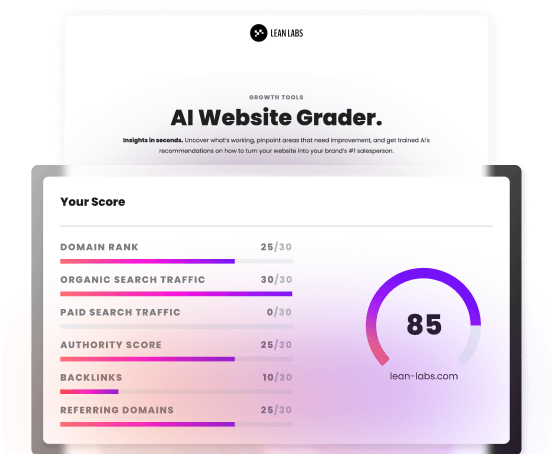
Reporting has to connect to a stakeholder decision, because the point of measurement is to justify continued investment or redirect it. Look for share-of-AI-answer trends over time, competitive benchmarking, and the ability to tie visibility changes back to the specific content work that drove them. A dashboard full of metrics that nobody can act on becomes a recurring cost with nothing to show for it. One free tool worth knowing here is HubSpot's AI Search Grader, which gives you a baseline read on how AI engines describe your brand before you commit budget to a paid platform, and it's a sensible first step for a team that wants to size the opportunity.
How much do AEO platforms cost?
AEO platform pricing varies widely by category and by how much of the track-optimize-report loop a product covers, so the honest guidance is to verify current pricing directly with each vendor rather than trust a number that will be stale by the time you read it. Pricing in this category is moving quickly as products add features and reposition, and most vendors gate their real numbers behind a demo.
A few patterns hold across the category. Visibility trackers and content optimization tools that handle one slice of the loop tend to sit at the lower end, often priced per seat or per tracked domain. End-to-end platforms that combine tracking, recommendations, and reporting tend to cost more because you're paying for the integrated workflow and the engine coverage behind it. Enterprise tiers add prompt volume, more engines, API access, and white-label reporting for agencies.
When we help a client build a budget, we frame it around the cost of the alternative rather than the sticker price alone, the same way we think about what it costs to work with us. Running AEO with no tooling means a person manually querying engines and tracking results in a spreadsheet, which works for a handful of prompts and falls apart at scale. The platform earns its license when it saves more analyst hours than it costs and when its recommendations produce visibility gains you can measure. For a smaller program, a couple of focused point tools plus a free baseline like AI Search Grader is often the right starting budget before you graduate to a full platform.
Should you buy a platform or hire an AEO agency?
The buy-versus-hire decision comes down to whether you have a person who will own the platform and run the recurring loop, since the best software produces nothing if no one acts on its recommendations. A platform pays off most for a team that already has AEO expertise, while an agency brings both the tooling and the practitioner's judgment to interpret what the tooling surfaces.
Buying a platform makes sense when you have content and marketing resources in-house who can take a recommendation and ship the change. The platform handles measurement and surfaces opportunities, and your team does the writing, the schema work, and the page updates. This is the right fit for organizations that want AEO capability to live inside the company long term and have the headcount to support it.
Hiring an agency makes sense when you want results without building the internal muscle first, or when you want a practitioner reviewing the platform's output so you're not acting on generic recommendations. We run AEO as a managed program where the tooling informs the strategy and experienced judgment drives the decisions, which tends to produce faster gains than handing a platform to a team still learning the discipline. The two paths aren't mutually exclusive either, since plenty of teams start with an agency to establish the program and bring it in-house once the playbook is proven.
.png?width=2146&height=1250&name=july-16-cta%20(1).png)
Schema markup recommendations
Schema markup is one of the most useful technical inputs for AEO, because structured data tells answer engines exactly what a page contains and how to interpret it, which makes your content easier to extract and cite. A platform's recommendations are only as good as the schema foundation underneath your pages, so this is worth getting right regardless of which tool you choose.
For AEO specifically, prioritize these schema types:
- FAQPage schema on any page structured as questions and answers, since this maps directly to the question-and-answer format answer engines pull from.
- Article schema with explicit author, publish date, and update date, which supplies the author and recency signals that engines weigh when deciding whom to trust.
- Organization schema on your brand pages so engines correctly attribute mentions and understand what your company does.
- HowTo schema on process and step-by-step content, which gives engines a clean structure to lift into a procedural answer.
Implementing schema correctly across a large site is detailed work, and errors silently cost you visibility because engines skip markup they can't validate. We built our AEO schema setup to automate structured data across a site so the markup stays accurate as content changes. Whatever method you use, validate your schema with a structured data testing tool and keep it current, because stale or broken markup undermines every other piece of your AEO program.
.png?width=1391&height=668&name=Growth%20Mapping%20Session%20(1).png)
.png?width=500&height=500&name=120%20(1).png)
.png?width=500&height=500&name=122%20(1).png)