%20(1).png?width=765&height=430&name=71%20(1)%20(1).png)
.png?width=500&height=500&name=126%20(1).png)
AI search engine optimization: the 2026 playbook
That repeatable read is what makes the rest of the benefits possible. Once you have consistent monitoring in place, you can spot patterns, measure whether your content work is paying off, and react when a competitor starts taking answers you used to own. The tool gives you an accurate read on the situation, and your content and schema work is what actually moves it, so you'll generally want both running together.
VIDEO TRAINING
Get the Growth Playbook.
Learn to plan, budget, and accelerate growth with our exclusive video series. You’ll discover:
 The 5 phases of profitable growth
- 12 core assets all high-growth companies have
- Difference between mediocre marketing and meteoric campaigns
.png?width=798&height=842&name=Playbook%20(1).png)
Thanks for submitting the form!
What are the main benefits of AI search optimization tools for a business?
The main benefits fall into five areas: visibility into AI answers, faster gap-finding, sharper prioritization, competitor insight, and time saved. Each one maps to a decision you'd otherwise be making blind.
|
Benefit |
What it means for your business |
|
Visibility into AI answers |
You see whether ChatGPT, Gemini, Perplexity, and Claude cite you for the questions buyers actually ask, in what context, and how often, so AI search stops being a black box you're guessing at. |
|
Faster gap-finding |
The tool flags questions your buyers ask that you don't answer well yet, which means you find the holes in your content in an afternoon instead of discovering them months later when a competitor is already cited there. |
|
Sharper prioritization |
Instead of guessing what to write next, you can rank topics by where you're losing citations and where the buyer intent is strongest, so your content calendar follows the data. |
|
Competitor insight |
You see which rivals AI mentions for your key questions and how often, which tells you exactly where you're winning the answer and where you have ground to make up. |
|
Time saved |
Once you're tracking dozens of prompts across four engines, automated monitoring replaces hours of manual checking every month, which frees your team to spend that time on the content that actually earns citations. |
The pattern worth noticing is that every benefit ties back to a faster, better-informed decision. The platforms that earn their keep are the ones that connect the measurement to a clear next move, because a visibility score that doesn't help you decide what to do next leaves you about where you started.
How do these tools help you find content gaps faster?
These tools find content gaps by comparing the questions buyers ask in your category against the answers you currently get cited for, then surfacing the mismatches. When Perplexity cites you for pricing questions but never for process questions, that gap shows up as a clear signal you can see at a glance instead of having to stumble onto it by accident.
Finding those gaps by hand is possible, and we'd encourage it when you're starting out, because opening each engine and asking your buyers' real questions teaches you a lot about how AI frames your category. The trouble is that manual gap-finding gets slow and unreliable as your prompt list grows, since you're re-running checks, logging results in a spreadsheet, and trying to spot trends across data that keeps shifting. A tool compresses that work into a monitored feed, so the gaps you'd eventually find over weeks of manual checking surface in a single view. That speed matters most in a fast-moving category, because the sooner you see a gap, the sooner you can publish the content that closes it before a competitor does.
How do AI search optimization tools help you prioritize content?
They help you prioritize by ranking your content opportunities against real signals: where you're already losing citations, which questions carry the strongest buyer intent, and where a competitor currently owns the answer. That ranking turns a vague content backlog into an ordered list of what to write next and why.
Prioritization is where a lot of content programs quietly lose momentum, because it's easy for a team to default to whatever topic is top of mind even when it isn't the one that moves the needle. With monitoring data in front of you, the next article practically chooses itself, since you can see the exact questions where you're absent and your buyers are present. We've found that this ordering effect is one of the most underrated benefits of these tools, because a good monitoring setup shows you where the citation opportunity actually sits and lets you confidently set aside the topics that won't move it. When the backlog is ranked, teams that want to produce against it faster often turn to scaling AEO content with AI agents so the publishing keeps pace with what the data surfaces.
Who benefits most from AI search optimization tools?
The teams that benefit most are those publishing content regularly, tracking more than a handful of priority prompts, and competing in a category where rivals are clearly optimizing for AI answers too. For these teams, AI search is a meaningful channel, and the cost of flying blind is real, so automated monitoring pays for itself quickly.
A few situations make the case especially strong. If you're managing answer engine optimization across a large site with hundreds of pages, manual tracking can't keep pace with how often AI answers shift, so a tool becomes the only practical way to stay current. If you report AI visibility to leadership or a client, automated monitoring gives you the trend data and screenshots that a spreadsheet of one-off checks can't match. And if your category is competitive enough that small movements in citation share affect revenue, the speed of an automated read starts paying for itself fast. Pairing these tools with a clear plan for getting recommended by AI gives the benefits somewhere to land, because the tool shows you where the gaps are and the plan is what you use to close them.
.png?width=2146&height=1250&name=july-16-cta%20(1).png)
When is manual tracking enough?
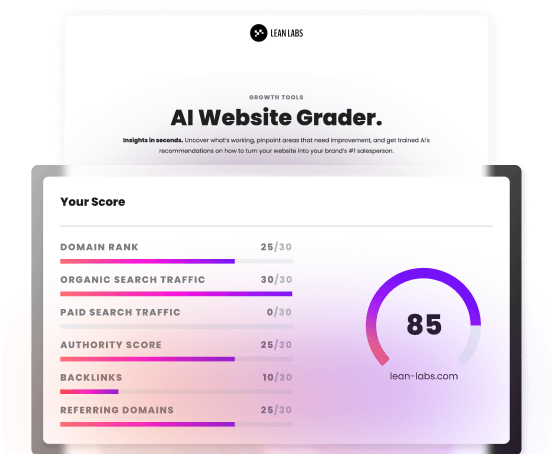
Manual tracking is enough when you're early, your prompt list is short, and AI search isn't yet a channel you're investing in seriously. If you're tracking a handful of priority questions, opening ChatGPT, Gemini, Perplexity, and Claude once a month and logging the results in a spreadsheet covers you fine, and it's free and accurate. HubSpot's free AI Search Grader gives you a reasonable first read on your visibility before you commit budget to a paid platform.
For earlier-stage teams, that saved budget is usually better spent on the content itself. A tool can confirm that AI isn't citing you, which is information you can often get for free, and the work that actually changes the answer is building a body of genuinely useful, well-structured content that AI wants to quote. We typically suggest getting your content and schema right first, then layering on a tool once you have enough live material for the monitoring to be meaningful and enough prompts that doing it by hand becomes a real time drain. That tipping point is different for every team, and the honest read is that you'll feel it when manual checking starts eating an afternoon you don't have.
Schema markup recommendations
For a buying-decision page like this one, structured data helps AI systems read your content cleanly and quote it accurately:
- FAQPage schema around the question-based H2 sections, with each heading as a Question and its opening answer as the acceptedAnswer, keeping the schema text matched to what's visible on the page
- Article schema with author, datePublished, and dateModified, so the content carries clear authorship and recency signals, which matter most for a fast-moving topic like AI search tooling
- Organization schema on your canonical brand page, defining the entity once with logo, sameAs social profiles, and contact details so AI can tie every brand mention back to a verified source
If you're implementing structured data at scale, our AEO schema setup keeps the markup maintainable across templates rather than hand-coded page by page. Validate every type in Google's Rich Results Test before publishing, and re-check after any template change so empty fields don't quietly cost you citations.
.png?width=1391&height=668&name=Growth%20Mapping%20Session%20(1).png)

.png?width=500&height=500&name=120%20(1).png)
.png?width=500&height=500&name=122%20(1).png)