%20(1).png?width=765&height=430&name=32%20(1)%20(1).png)

.png?width=1567&height=1593&name=Playbook%20(2).png)
.png?width=660&height=543&name=Frame%201984077310%20(1).png)
%20(1).png?width=500&height=500&name=26%20(2)%20(1).png)
What is closed-loop marketing? Definition, process, and examples
You also need at least one person who can commit five or more hours per week to this. Loop marketing works for a startup with a one- or two-person marketing team because AI agents absorb production work that would otherwise require additional headcount. But someone still needs to own the process.
Minimum tech and budget requirements:
|
Requirement |
Details |
|---|---|
|
CRM/CMS platform |
HubSpot is ideal; alternatives require stitching multiple tools together |
|
AI tools budget |
$1,000 to $2,000/month for the tool stack |
|
Personnel |
At least one marketer at 25-50% capacity, or a contractor (~$4,000/month) |
|
Total monthly floor |
$5,000 to $6,000/month |
|
Setup time investment |
Two to three weeks of concentrated foundation work |
If you can clearly articulate the problem you solve, the solution you deliver, your differentiators, and the results you provide, you're ready. If you're still working through product-market fit, direct customer conversations and rapid experimentation will serve you better than building a loop marketing system.
Phase 1: Foundation (days 1 to 10)
This phase is entirely about documentation. You're building the single source of truth that every AI agent, every team member, and every piece of content will reference for the rest of the process.
Three things need to happen in this window.
Define your ICP and buyer segments
Identify your ideal customer profile and the specific groups within it that you want to reach at a detailed, if not personalized, level. This isn't a one-paragraph persona with a stock photo. You need to know their industry, company size, role, buying stage, primary concerns, and the language they actually use when describing their problems.
Segment between your low-value and highest-value buyer types so you can properly attend to your highest-value leads first. A small contact base enables you to focus on high conversion at low volume, which then self-funds the ability to increase volume later.
If you're running on HubSpot, your Smart CRM Segments can auto-update based on behavioral triggers once you've defined these groups.
Collect and ingest your core company context
Document your industry facts, company facts, and solution facts. Most teams either rush this step or skip it entirely, and it's the single biggest reason AI output disappoints. We call this the Factor 8 Framework: the structured context that gives AI agents enough pattern data to represent your brand accurately instead of generating bland filler.
Think of it like training a new salesperson. You'd walk them through your brand, your market, your positioning, your value proposition, your differentiators, your unique mechanism, the buyer's biggest concerns and objections, and how you answer those objections. If you're not doing that with your AI systems, you should be wildly disappointed with the output.
Context documents to build in Phase 1:
- Industry facts and market positioning
- Company facts, history, and differentiators
- Solution facts, features, and pricing structure
- Customer FAQs and common objections with approved responses
- Competitor landscape and your position within it
Establish brand beliefs and documented points of view
Your brand beliefs and points of view are the anchor points and framing for all loop marketing content creation. Without them, AI agents produce content that sounds like it could have come from any company in your category.
This means building three specific documents:
- Brand voice document that describes how your brand should be represented in style, strategy, and structure. Include both positive examples and counter-examples so AI agents know what to aim for and what to avoid.
- Bad copy rules that document every instance of bad copy your AI should avoid. This functions as a negative ruleset that catches output problems the brand voice document alone won't prevent. Include terms you use and terms you specifically avoid.
- Living feedback loop protocol where, when AI makes mistakes, you add specific rules so it won't repeat them. Show what was wrong, why it was wrong, and how it was fixed. Over time this trains AI's mistakes out without repetitive manual correction.
This three-layer system is the most powerful quality control mechanism we've seen for maintaining brand voice at scale. Skip it and you'll produce content that's technically correct but sounds like everyone else.
Phase 2: Agent building and content production (days 11 to 60)
AI agents trained on your brand context produce first drafts of every marketing asset type you need: emails, web pages, ads, social posts, blog posts, FAQ responses. This phase is about building those agents and getting your first campaign live.
Pick the right workflows to automate
Not everything needs an agent. Pick what you're actually going to run frequently. If it's not a core business function and you're not going to run it dozens of times, you probably shouldn't be building an agent for it.
The workflows worth automating first are the ones your team repeats weekly: email sequences, social posts, blog drafts, ad copy, FAQ responses, and landing page content.
Build agents trained on your brand context
Develop AI agents that create drafts of all your target marketing assets: emails, web pages, ads, social posts, blog posts, FAQ responses. The key word is "drafts." Loop marketing does not replace humans in marketing. It replaces the need to start from scratch every time.
Train each agent on your brand context documents from Phase 1. Then develop quality rules that improve clarity and brand voice execution so you can remix content at scale.
You're generally not getting output that's very good until you've run through, tested, iterated, and refined 30, 40, 50 times. That's normal. The first few weeks of agent building feel slow. By week four or five, the agents start producing drafts that need editing rather than rewriting.
Structure your first campaign cycle
Pick one specific product or service and one specific buyer segment. Build out a strong landing page, FAQ coverage, and a supporting content cluster that includes both on-site and off-site assets. Off-site content is especially important for building AI consensus, meaning the likelihood that AI search tools will recommend you when someone asks about your category.
A single campaign cycle should include:
|
Asset type |
Purpose |
|---|---|
|
Landing page |
Primary conversion point for this product/segment |
|
FAQ coverage |
Answer the specific questions this buyer segment asks |
|
On-site blog content |
Supporting the topic cluster with depth |
|
Off-site answer content |
Building AI consensus and visibility beyond your domain |
|
Social posts |
Distribution across channels where buyers spend time |
|
Email sequences |
Nurturing contacts within this segment |
The Amplify stage works well when you focus on just one or two channels because it lets you do that channel at scale, multiplying your velocity. What used to require full-time hires now needs proper configuration and tuning of AI systems plus a few hours of one marketer's time per week.
Set a measurement date before you publish
Every cycle needs a scheduled measurement date. Some assets need 30 to 60 days to accumulate enough traffic for meaningful analysis. If you don't set the date up front, you'll either measure too early and make decisions on insufficient data, or forget to measure at all.
Phase 3: First optimization cycle (days 61 to 90)
Analyze initial content performance to see what's working and what isn't. Drive improvements where there are gaps and double down where there's traction. The optimization cycle is what turns a collection of marketing assets into a compounding system.
What to measure
Look at what was clicked versus what was overlooked. Look at what converted and what those conversion rates were against industry benchmarks. Look at what buyers responded to. Most importantly, look at what questions they ask. That gives you clear direction on what assets perform well enough to use more, what's underperforming and needs improvement, and what new buyer-centric assets you should create based on their actual responses.
We use a two-method attribution framework:
Method 1: Buyer self-reported attribution. Ask "How did you hear about us?" at key conversion points like meetings, demos, and consult requests. Use an open text field, not a dropdown. Self-reported attribution is surprisingly accurate and detailed when you leave it as an open input.
Method 2: Link-based journey tracking. Create targeted accounts for each campaign with isolated URL and link structures. Track individual user journeys and report by segment which users took which steps. Your outbound sales team can then follow up with the most engaged users and encourage action from those who took little or none.
As campaigns mature, layer both approaches together for a fuller picture of what's actually driving revenue.
Don't measure too frequently
You don't need to measure and evolve with data every two or four weeks. That's just not enough time to collect enough data to make a consequential shift. A quarterly calendar is the most appropriate time frame for the full loop. You can execute three loop marketing campaigns in three months and then do one consolidated data analysis at the end. That analysis shapes your next quarter.
Feed insights back into the system
Every finding from your measurement cycle becomes an input for the next round. Content that performed well tells you what topics and formats resonate with your buyer segments. Underperforming content tells you where your messaging, targeting, or channel selection missed. Questions buyers asked during sales conversations tell you exactly what content to create next.
This is what separates loop marketing from running traditional campaigns with AI tools bolted on. The data loop is the whole point. If you're going to create assets one time and expect them to perform without improvement, loop marketing isn't the right framework for you.
What "done" looks like at day 90
By the end of 90 days, you should have all core assets created at a B-plus or better effectiveness. That means core product and solution pages, FAQ coverage, on-site blog content, off-site answer campaigns, ICP segments with tailored experiences, segment nurturing workflows, and social posts are all live and producing data.
You should have at least one full campaign running with enough performance data to start optimizing. By month six, aim for two campaigns running with enough data to make confident decisions about what's working and what to adjust.
90-day milestone summary:
|
Phase |
Timeline |
Primary deliverable |
|---|---|---|
|
Foundation |
Days 1 to 10 |
ICP docs, brand context, voice guides, feedback loop protocol |
|
Agent building |
Days 11 to 60 |
Trained AI agents, first campaign assets live, content remix system |
|
Optimization |
Days 61 to 90 |
Performance analysis, attribution data, refined agent rules, Q2 plan |
Where your website fits in this system
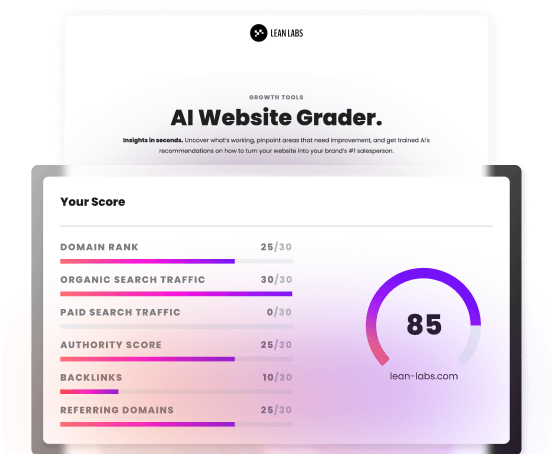
Your website is your most effective salesperson. It brings first-time visitors through a guided tour of everything you offer. Off-site marketing brings potential buyers to the front door. The website gives the tour. Every exit point is a conversion point.
If your website underperforms, every channel feeding into it underperforms too. Focus optimizations on key assets that aren't performing at a high level: homepages, solution pages, demo pages, and connective nurturing workflows. Those four areas are where teams with the least optimization experience typically see high bounce rates, high exit rates, and low conversion rates.
A high-performing website is required for high-performance loop marketing. If your current site isn't converting the traffic you're already getting, fixing that should be part of your first 90 days.
How loop marketing compounds over time
The real payoff isn't visible at day 90. It's visible at month six, nine, and twelve. Each cycle through the loop makes the next cycle more effective because you're building on real performance data instead of assumptions.
Better results produce stronger proof. Stronger proof attracts better-fit buyers. Better-fit buyers produce better results. That's the compounding cycle that makes loop marketing fundamentally different from running quarterly campaigns that start over from scratch every time.
The teams that see the biggest gains are the ones that commit to the loop as a discipline: consistent workflows, scheduled measurement cycles, and continuous refinement. Not a one-time project.
Loop marketing is a framework introduced by HubSpot for AI-era marketing. Lean Labs implements loop marketing systems on HubSpot for B2B companies. Learn more about our growth marketing approach or start a conversation.
.png?width=2146&height=1250&name=july-16-cta%20(1).png)
%20(1).png?width=500&height=500&name=37%20(4)%20(1).png)